
Italian cuisine is synonymous with artistry, and few dishes illustrate this more than tortellini. These small, ring-shaped pasta parcels, traditionally filled with meat, cheese, or a blend of both, are a culinary treasure of Emilia-Romagna, particularly in Bologna and Modena. Historically, tortellini were crafted entirely by hand a process demanding patience, precision, and dexterity. Families would gather around kitchen tables, carefully folding tiny squares of dough over delicious fillings to create the iconic navel-like shape.
While the hand-folding method preserves cultural authenticity, it is labor-intensive, time-consuming, and challenging to scale for commercial purposes. Enter the tortellinatrice, a specialized pasta-making machine that merges tradition with modern technology. Designed to replicate the delicate artistry of hand-folded tortellini, the tortellinatrice allows chefs, pasta producers, and home cooks alike to produce high-quality tortellini efficiently, consistently, and hygienically.
What is a Tortellinatrice
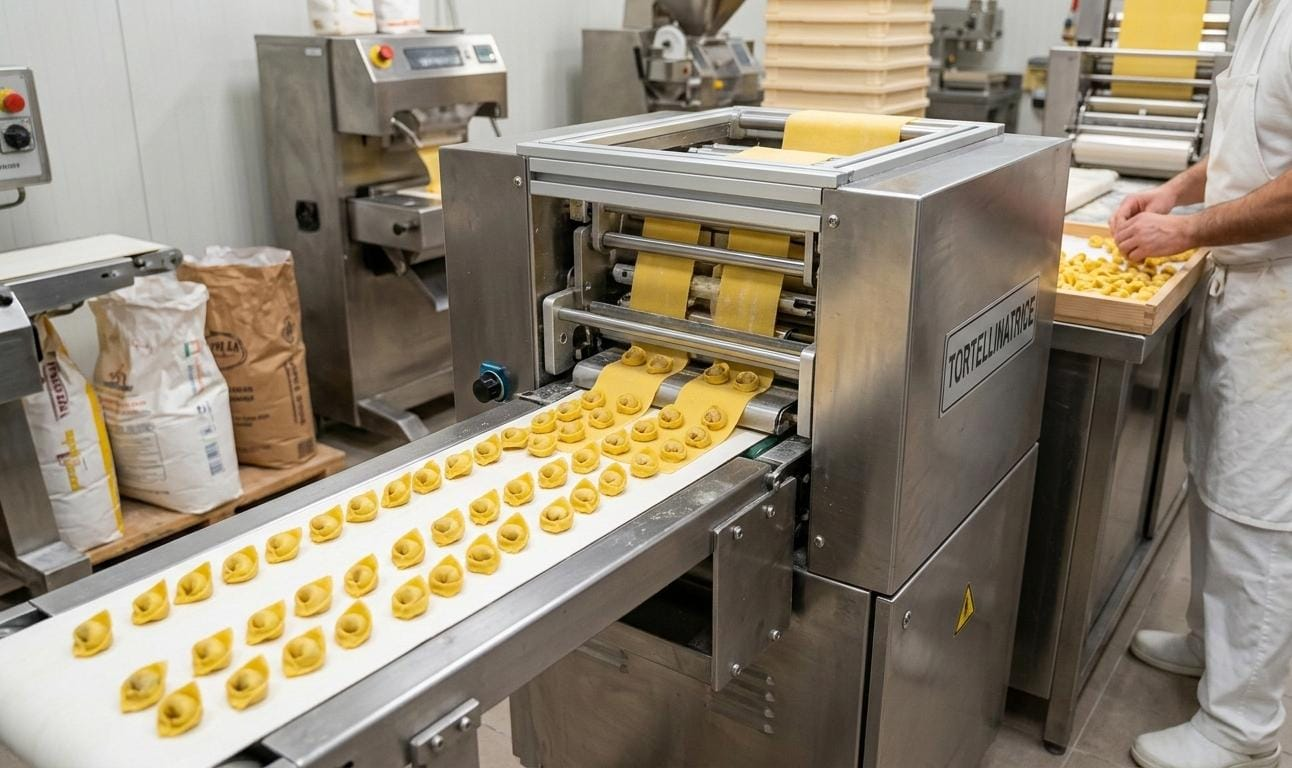
A tortellinatrice is a specialised machine designed to automatically or semi-automatically shape, fill, fold, seal, and cut tortellini with precision. Unlike standard pasta machines that create long strands or flat sheets, it focuses exclusively on stuffed pasta with intricate forms. The process includes rolling dough to an even thickness for proper cooking, dispensing measured portions of cheese, meat, or vegetable fillings, and carefully folding the dough into the traditional ring shape while sealing the edges securely.
It then cuts and separates each piece, preparing them for cooking, freezing, or drying. By streamlining these stages, a tortellinatrice maintains the appearance and texture of hand-crafted tortellini while significantly improving speed and production capacity, with many models capable of producing thousands of pieces per hour without compromising quality.
Historical Roots of Tortellini and the Tortellinatrice
Tortellini’s heritage is deeply entwined with Italian culture. Originating in Emilia-Romagna, the pasta carries folklore and tradition. Legend has it that the shape was inspired by the navel of Venus, the Roman goddess of love a symbol of Italy’s attention to detail, beauty, and culinary passion.
For generations, families meticulously handcrafted tortellini during festive occasions. The process demanded skill and patience, as the dough had to be thin, the filling proportioned perfectly, and folds executed with precision. This tradition passed from grandmothers to children, maintaining not only a recipe but a cultural ritual.With the rise of restaurants, artisan pasta shops, and industrial food production, demand grew beyond what handcrafting alone could sustain.
How a Tortellinatrice Works
Understanding how a tortellinatrice works reveals why it is essential in modern pasta production. The process begins with precisely rolled pasta sheets fed into the machine, where consistent thickness ensures even cooking and prevents tearing. Calibrated dispensers then release accurate portions of filling, maintaining flavour balance while avoiding bursting or underfilling.
The dough is carefully folded around the filling to form the classic tortellini ring, with controlled pressure or light moisture applied to secure the edges and preserve structure. Finally, the shaped pieces are cut, separated, and prepared for cooking, freezing, or packaging. Many advanced models also allow adjustments to dough thickness, filling quantity, and tortellini size, providing flexibility for both artisanal craftsmanship and large-scale commercial production.
Types of Tortellinatrice
- Manual Tortellinatrice Best suited for home cooks and small artisan kitchens. Operated by hand, it offers full control over shaping and filling for each batch.
- Semi-Automatic Tortellinatrice Combines manual oversight with automated functions. Ideal for small businesses and boutique pasta shops seeking consistency, efficiency, and flexibility.
- Industrial / Fully Automatic Tortellinatrice Designed for high-volume production. These systems integrate mixing, rolling, filling, and conveying processes, producing thousands of tortellini per hour with uniform quality and hygiene standards.
Benefits of Using a Tortellinatrice
Using a tortellinatrice brings numerous advantages:
- Speed and Efficiency: It reduces manual labor and increases output.
- Consistency: Ensures uniform shape and size, which translates into even cooking.
- Labor Savings: Automates repetitive tasks, reducing human error and fatigue.
- Hygiene: Stainless-steel construction and food-grade components allow easy cleaning and compliance with safety standards.
- Scalability: Enables small kitchens to scale production and large factories to meet international demand.
- Culinary Innovation Supports experimentation with new fillings, dietary preferences (gluten-free, vegan), and shape variations.
Popular Tortellinatrice Brands and Models
| Model | Automation | Production Volume | Pasta Types Supported |
| Ostoni T8 | Fully Automatic | Very High | Tortellini |
| ANKO HLT‑700U | Fully Automatic | High | Tortellini, Ravioli |
| Dominioni D140T | Semi-Automatic | Medium | Tortellini, Cappelletti, Ravioli |
How to Choose the Right Tortellinatrice
When choosing a tortellinatrice, it is important to evaluate several practical factors to ensure the machine fits your production needs. Start by assessing the output capacity, meaning how many tortellini you intend to produce per hour, as this determines whether a manual, semi-automatic, or industrial model is most suitable.
Budget is another key consideration, with manual machines typically costing a few hundred dollars, semi-automatic options ranging into the thousands, and large industrial systems often exceeding $20,000. You should also consider the availability of moulds and accessories, since interchangeable moulds allow the production of different stuffed pasta types such as ravioli or cappelletti. Finally, prioritise ease of cleaning and durability by selecting machines made from food-grade stainless steel, which supports hygiene standards and long-term performance.
Maintenance and Troubleshooting
Proper maintenance maximizes longevity and performance:
- Cleaning: Rollers, molds, and cutters should be cleaned after each use with warm water and food-safe detergent.
- Lubrication: Regularly lubricate moving parts as per manufacturer instructions.
- Inspection: Check molds, cutters, and filling dispensers for wear.
- Temperature Control: Keep dough and filling at safe temperatures to prevent spoilage.
Tortellinatrice in Modern Kitchens
- Restaurants Consistent tortellini for menu items and catering.
- Artisan Shops Scale traditional recipes without compromising quality.
- Home Kitchens Manual or countertop machines allow home chefs to produce restaurant-quality tortellini.
- Start-ups Entry-level or used machines help small businesses test the market affordably.
Future of Tortellinatrice Technology
The pasta industry continues to advance through innovations that enhance efficiency, precision, and sustainability. Modern machines now feature programmable recipe settings that allow quick transitions between different tortellini varieties, along with real-time monitoring systems that ensure consistent dough thickness and accurate filling distribution.
Energy-efficient motors and eco-friendly designs help reduce environmental impact, while AI-assisted automation improves quality control and minimises production waste. Together, these developments enable the tortellinatrice to preserve traditional Italian craftsmanship while meeting the demands of contemporary, high-standard food production.
Conclusion
The tortellinatrice is a remarkable blend of tradition, craftsmanship, and modern engineering. It transforms the meticulous art of tortellini making into a precise, efficient, and scalable process, preserving the authenticity of Italian cuisine while enabling large-scale production.
From artisan kitchens in Bologna and Modena to commercial factories worldwide, the tortellinatrice ensures every tortellini is perfectly shaped, sealed, and ready to delight diners. By balancing automation with heritage, it guarantees that this iconic pasta will continue to captivate palates for generations.
FAQs
Can a tortellinatrice make other pasta besides tortellini?
Yes, many models produce ravioli, cappelletti, and agnolotti using interchangeable molds.
Is it suitable for small kitchens?
Semi-automatic machines are ideal for small restaurants or artisanal pasta shops.
How much does a tortellinatrice cost?
Manual units start in the low hundreds; semi-automatic machines range from a few thousand dollars to mid-five figures; industrial models exceed $20,000.
How do you clean a tortellinatrice?
Use warm water, food-safe detergents, soft brushes, and follow manufacturer guidelines.
Which brands are most reliable?
Top brands include Ostoni, ANKO, Dominioni, La Monferrina, and Officina DEA.